The Human Stomach: The Remarkable Digestive Powerhouse
Introduction
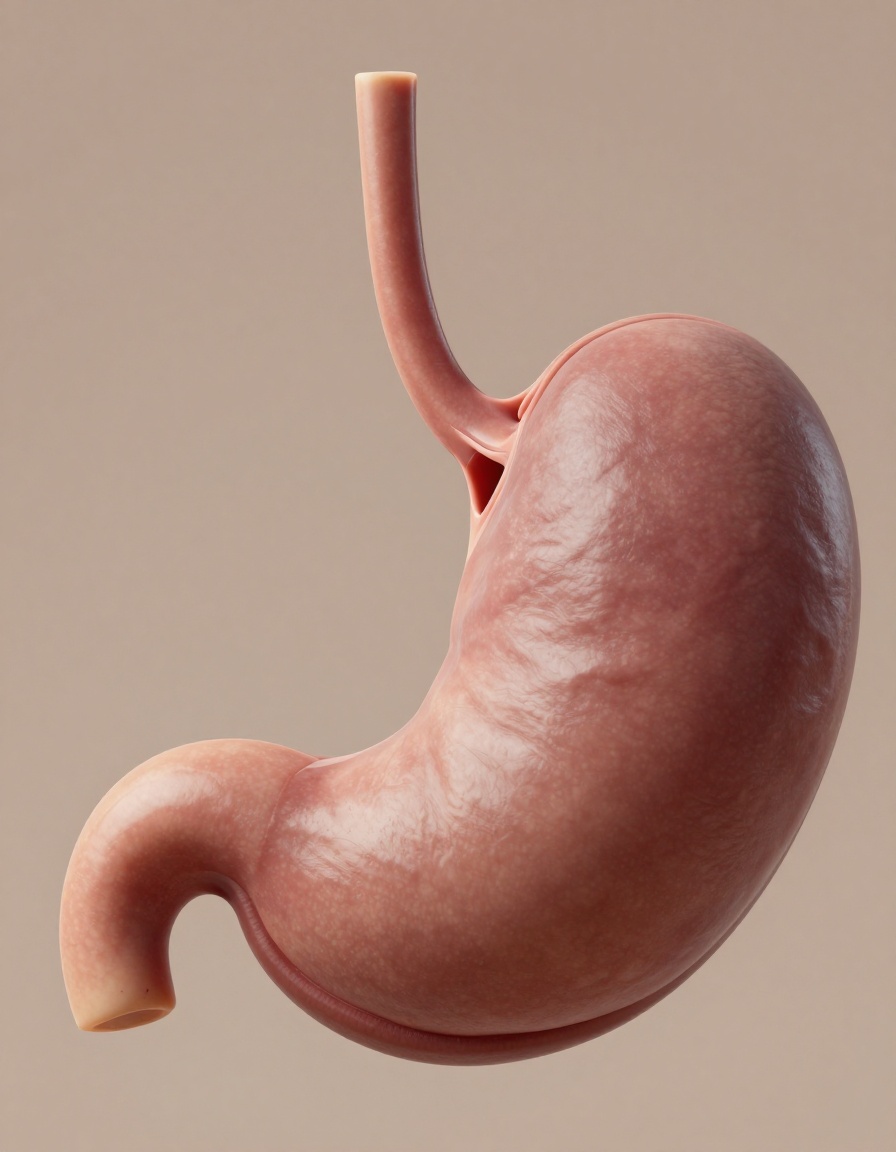 The human stomach represents one of the most fascinating and vital organs in the digestive system. This muscular, expandable organ performs essential functions including food storage, mechanical breakdown through powerful churning contractions, and chemical digestion via secretion of highly acidic gastric juice containing hydrochloric acid and protein-digesting enzymes that efficiently decompose nutrients. This J-shaped organ resides in the upper left portion of the abdominal cavity beneath the diaphragm, operating as a sophisticated biochemical reactor capable of holding between one and two liters of food and liquid. The stomach maintains an internal environment acidic enough to dissolve metal, yet shields its own tissues from this corrosive mixture through ingenious protective mechanisms. These mechanisms include thick mucus secretion and rapid cellular regeneration, exemplifying nature's extraordinary biological engineering at its finest.
Main Article
The human stomach stands as one of the most sophisticated and remarkable organs in the digestive tract. This dynamic muscular chamber serves as the critical intermediate processing hub between the esophagus above and the small intestine below. It performs essential functions that transform consumed food from relatively large, intact pieces into a semi-liquid mixture called chyme that can be efficiently processed in the intestines for nutrient extraction and energy production fueling all bodily activities.
This extraordinary organ appears J-shaped or crescent-shaped depending on its degree of fullness and individual anatomical variations. It possesses remarkable capabilities including temporary storage that permits meal-based eating patterns rather than requiring continuous feeding throughout the day. The stomach executes vigorous mechanical digestion through powerful muscular contractions that thoroughly mix and grind food particles into progressively smaller fragments. It conducts sophisticated chemical digestion through secretion of gastric acid and enzymes that initiate breaking down proteins and other nutrients into simpler components. The highly acidic environment provides antimicrobial protection that destroys most pathogenic bacteria and viruses that inevitably enter with food or water. Precise regulatory mechanisms coordinate these diverse functions in response to neural signals from the brain and spinal cord, hormonal messages from various endocrine glands, and local chemical stimuli from food itself.
The stomach's anatomical position in the upper abdomen is strategically vital. It sits nestled beneath the protective dome of the diaphragm and partially shielded by the lower ribs on the left side. This positioning allows it to receive food from the esophagus, which penetrates through the diaphragm and enters the stomach through a muscular ring called the lower esophageal sphincter or cardiac sphincter due to its proximity to the heart. The sphincter normally remains tightly closed except during swallowing when it briefly relaxes to permit food passage, preventing highly acidic stomach contents from refluxing backward into the delicate esophagus where they would cause painful irritation, inflammation, and tissue damage.
After the stomach completes its digestive processing, which typically requires two to four hours for a standard meal, the partially digested chyme is gradually released. This timing varies considerably based on meal composition, with fats taking much longer than carbohydrates to empty. The chyme exits through another muscular valve called the pyloric sphincter at the stomach's outlet into the duodenum, the first section of the small intestine. This occurs at carefully controlled rates that prevent overwhelming the intestines' digestive and absorptive capacity.
The stomach's most extraordinary and defining feature is undoubtedly its capacity to produce and safely contain gastric juice. This remarkably acidic fluid ranks among the most corrosive biological substances in the human body and would prove dangerous if present anywhere else. This gastric juice contains hydrochloric acid secreted by specialized parietal cells located in gastric glands distributed throughout the stomach lining, particularly concentrated in the body and fundus regions where most digestion occurs.
The concentration of this acid can create an internal stomach pH as low as 1.5 to 2 during active digestion—extraordinarily acidic, exceeding battery acid in some measurements and comparable to concentrated lemon juice or vinegar. The acid is sufficiently potent to dissolve metals like zinc, iron, and even copper given adequate contact time, raising the compelling question of how the stomach protects itself from this corrosive environment.
This extreme acidity serves multiple critical functions extending far beyond simple digestion. First, it activates pepsinogen, an inactive enzyme precursor secreted by chief cells, into pepsin, the active protein-digesting enzyme that operates optimally in acidic conditions and cannot function at neutral pH. Second, it creates an optimal chemical environment for pepsin and other gastric enzymes to function at maximum efficiency. Third, it chemically cleaves food's molecular bonds through acid hydrolysis, rendering nutrients more accessible for enzymatic digestion. Perhaps most importantly from an evolutionary survival perspective, it destroys potentially dangerous microorganisms including bacteria, viruses, parasites, and fungi that inevitably enter the digestive tract with food and water, providing crucial first-line antimicrobial defense preventing numerous foodborne infections and diseases.
How does the stomach manage to produce and contain such powerfully corrosive acid without literally digesting itself? This paradox puzzled scientists and physicians for centuries before protective mechanisms were finally elucidated through careful research and experimentation. The answer lies in multiple sophisticated defense systems working synergistically to protect the stomach lining from acid damage and maintain tissue integrity.
The primary protective mechanism involves secreting a thick, viscous layer of alkaline mucus by specialized mucous cells that line the entire stomach surface. This creates a physical and chemical barrier approximately one millimeter thick that separates stomach wall tissue from highly acidic contents in the stomach lumen. This mucus is not merely a passive barrier but an active protective system containing bicarbonate ions that neutralize any acid molecules penetrating into the mucus layer, creating a remarkable pH gradient from the intensely acidic environment of pH 2 in the stomach lumen to a nearly neutral pH of 7 at the actual epithelial cell surface. This means that while stomach contents are bathed in highly corrosive acid capable of degrading proteins and killing bacteria, the actual stomach wall cells exist in a relatively neutral, protected microenvironment preventing damage.
 Additionally, the stomach employs rapid cellular turnover as a secondary defense mechanism. The entire surface epithelium is completely replaced approximately every three to five days through continuous cell division in the base of the gastric glands and migration upward to replace older cells that are shed into the stomach lumen and eventually eliminated with waste. This extraordinarily rapid replacement rate ranks among the fastest in the entire body, ensuring that any cells suffering acid damage despite mucus protection are swiftly discarded and replaced with fresh, healthy cells before significant injury accumulates that could compromise the barrier.
Furthermore, prostaglandins play crucial roles in maintaining these protective mechanisms. These hormone-like lipid compounds are produced by stomach cells and stimulate mucus and bicarbonate secretion, promote robust blood flow to the stomach wall delivering nutrients and oxygen needed for rapid cell replacement, and support tight junctions between epithelial cells that prevent acid from leaking between cells into underlying tissues. This explains why medications like aspirin, ibuprofen, and other nonsteroidal anti-inflammatory drugs, commonly abbreviated NSAIDs, can damage the stomach lining and cause ulcers when used chronically or in high doses—these drugs operate partly by inhibiting prostaglandin synthesis, thereby undermining these critical protective mechanisms.
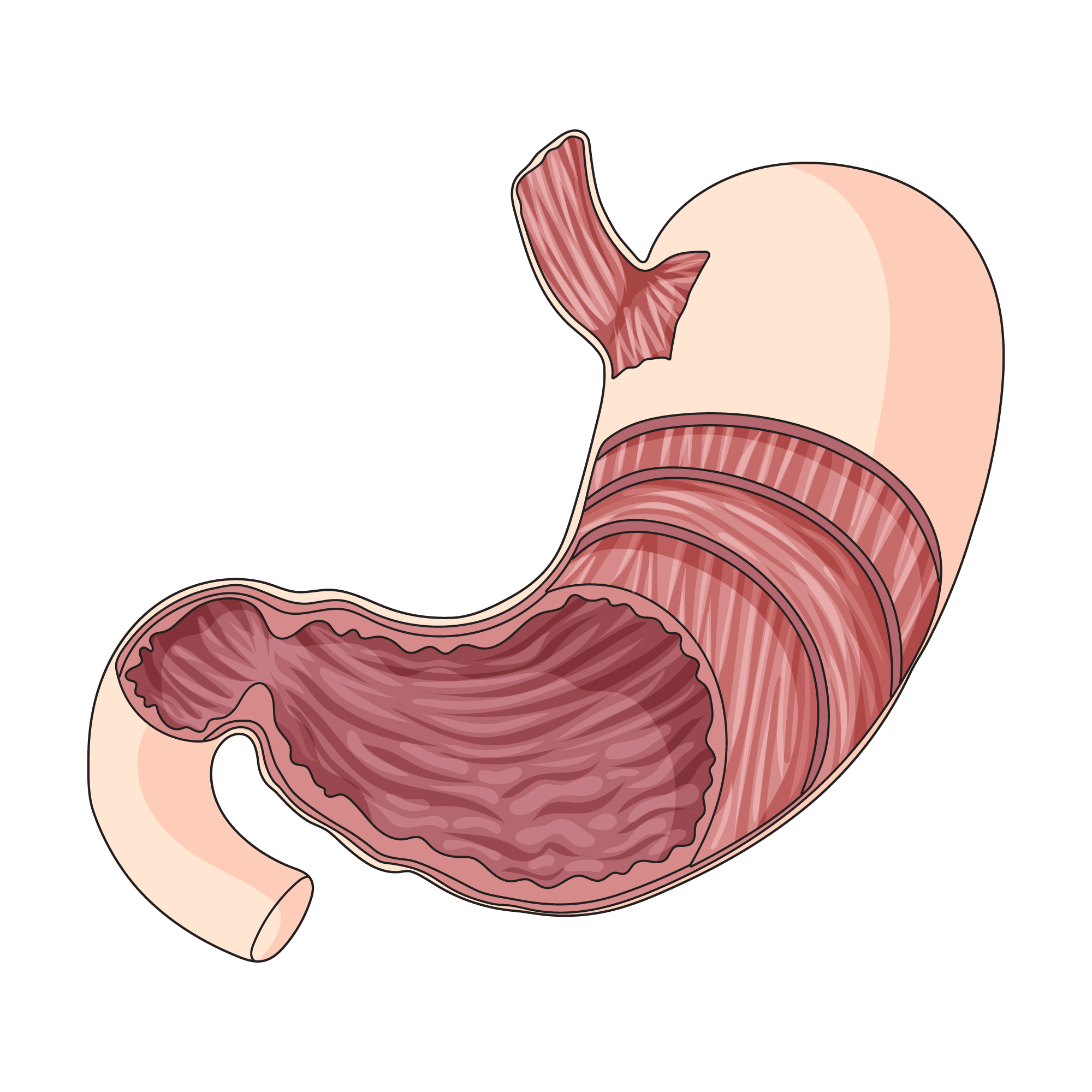
The stomach demonstrates remarkable expandability, capable of accommodating volumes ranging from approximately 50 milliliters when completely empty to between 1,000 and 2,000 milliliters when fully distended, representing a twenty to forty-fold increase. This expansion is made possible by rugae, large folds in the stomach lining that flatten as the stomach fills. The stomach wall contains three layers of smooth muscle oriented in different directions, producing multidirectional contractions. Peristaltic waves begin in the upper stomach and sweep toward the pylorus approximately three times per minute.
Function
The stomach performs multiple essential functions critical for digestion, nutrient processing, pathogen protection, and overall health.
The primary function is serving as a temporary reservoir, permitting humans to consume large meals at several-hour intervals rather than continuous feeding. This storage capability ranges from 50 milliliters when empty to 1,000-2,000 milliliters when filled—a twenty to forty-fold increase enabled by rugae, accordion-like folds that flatten as the stomach expands. This meal-based pattern facilitates breakfast, lunch, and dinner while engaging in work, school, and sleep without interruption.

The stomach executes intensive mechanical digestion through powerful contractions mixing food with secretions and fragmenting particles into smaller pieces, dramatically increasing surface area for enzymatic action. The three muscle layers—outer longitudinal, middle circular, and inner oblique—produce multidirectional contractions more effective than two-layer arrangements. Peristaltic waves sweep toward the pylorus three times per minute, propelling finely ground chyme through the pyloric sphincter while forcing larger particles back for additional processing.
Chemical digestion involves secreting gastric juice containing hydrochloric acid (pH 1.5-2), pepsin for protein digestion, and gastric lipase for fat breakdown. Hydrochloric acid activates pepsinogen to pepsin, provides optimal pH for enzyme function, cleaves molecular structures, and destroys pathogens.
Structure
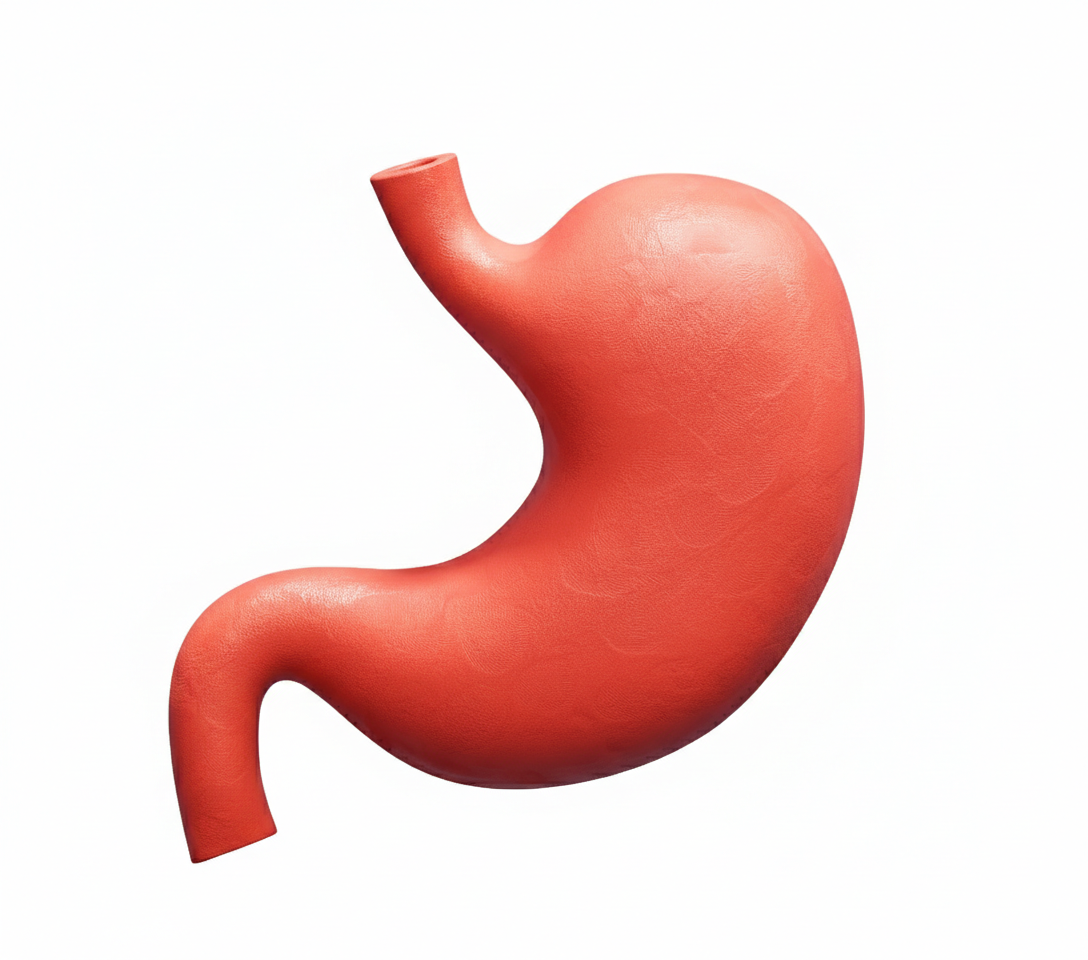
The stomach possesses a distinctive J-shaped anatomical structure with a curved greater curvature (approximately 40 centimeters) forming the outer border and a shorter lesser curvature (about 10 centimeters) forming the inner border.
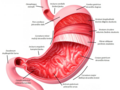
Anatomists divide the stomach into four regions. The cardia is the small region surrounding the lower esophageal sphincter, functioning as a transitional zone. The fundus is the dome-shaped upper portion extending above the esophageal entrance, primarily storing ingested food. The body or corpus represents the large central portion comprising most volume, functioning as the main storage chamber and primary digestion site. The pyloric region is the funnel-shaped lower portion narrowing toward the outlet, subdivided into the pyloric antrum and pyloric canal.
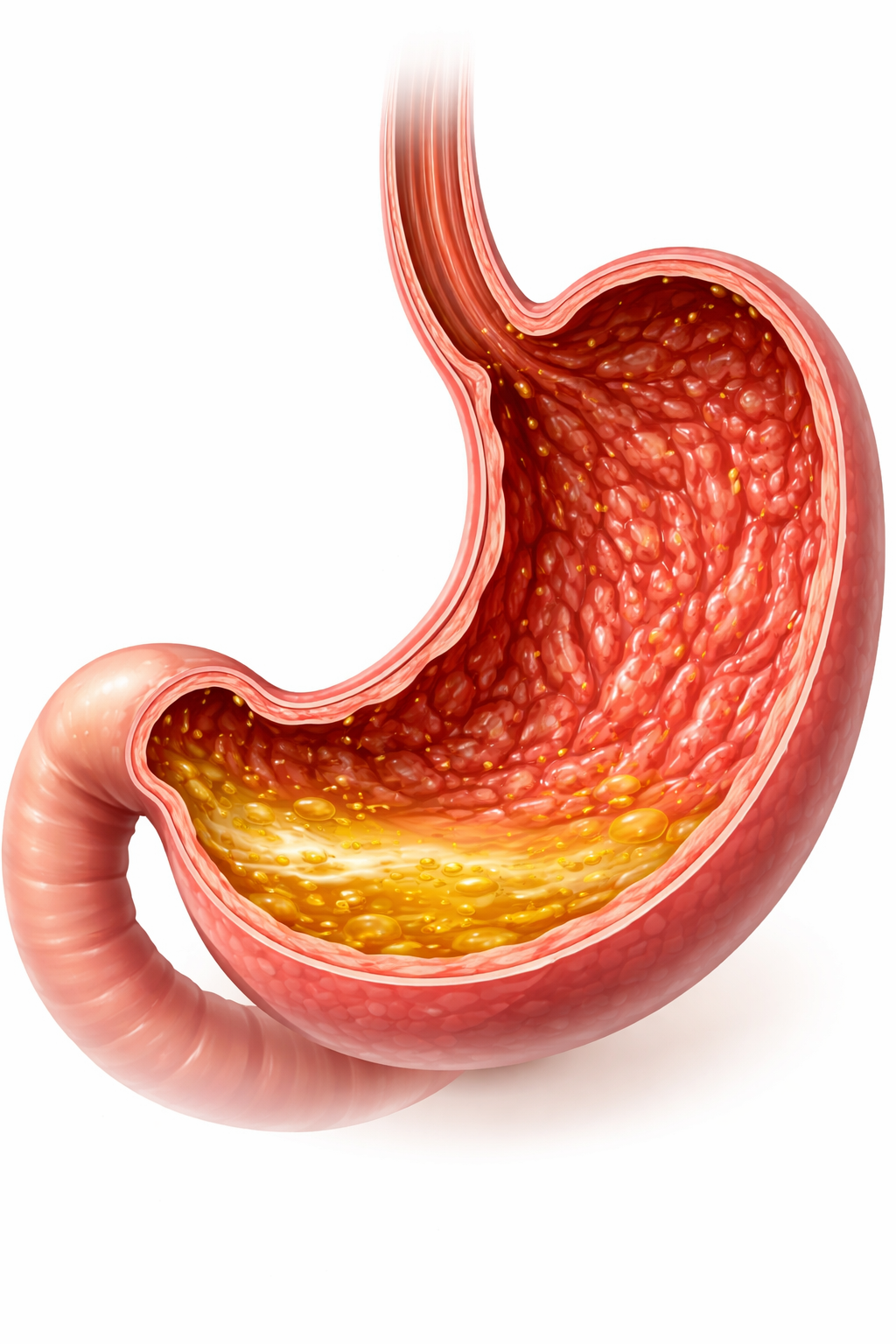
The stomach wall comprises four concentric layers. The mucosa, the innermost layer, consists of columnar epithelium specialized for mucus secretion. The submucosa contains connective tissue with blood vessels, lymphatics, and nerves. The muscularis externa contains three smooth muscle layers—outer longitudinal, middle circular, and inner oblique—enabling powerful contractions. The serosa is the outermost protective membrane. The stomach harbors approximately 35 million gastric glands with specialized cells: mucous cells producing protective mucus, parietal cells secreting acid and intrinsic factor, chief cells secreting pepsinogen, and G cells producing gastrin.
Location and Shape
The stomach occupies a strategic position in the upper abdomen, primarily in the left hypochondriac and epigastric regions, nestled beneath the diaphragm.
The stomach lies inferior to the left liver lobe and diaphragm, anterior to the pancreas, superior to the transverse colon, and medial to the spleen on the left. The esophagus enters through the esophageal hiatus. This strategic positioning optimally receives food from the esophagus, processes it through digestion, and delivers chyme to the duodenum.
The stomach's position varies with body position, degree of fullness, breathing, and individual variations. When empty, it lies mostly behind the lower ribs; when distended, it extends downward becoming more palpable. Typical dimensions include 25-30 centimeters length, 10-15 centimeters width, and 8-10 centimeters thickness when moderately filled, with capacity of 1,000-2,000 milliliters. An empty stomach weighs 100-150 grams.
Diseases
Despite protective mechanisms, the stomach remains vulnerable to various diseases impacting digestive function and quality of life.
Gastritis refers to stomach lining inflammation. Acute gastritis develops suddenly from excessive alcohol, chronic NSAID use, severe physiological stress, or corrosive substances, causing burning pain, nausea, vomiting, and bleeding. Chronic gastritis develops gradually from persistent Helicobacter pylori infection, autoimmune conditions, or bile reflux, potentially leading to mucosal atrophy, reduced acid production, vitamin B12 deficiency, and increased ulcer and cancer risks.
Peptic ulcers are open sores in the stomach lining (gastric ulcers) or duodenum (duodenal ulcers) when mucus barriers break down and acid damages tissue. They cause burning pain that intensifies when empty. Most result from Helicobacter pylori infection or chronic NSAID use.
Gastroesophageal reflux disease (GERD) occurs when the lower esophageal sphincter fails to close properly, allowing acidic contents backward causing heartburn. Chronic GERD leads to esophageal inflammation, strictures, and precancerous changes.
Gastroparesis involves impaired contractions slowing or preventing emptying, arising from diabetes, nerve damage, medications, or unknown causes. Symptoms include nausea, vomiting, early satiety, and poor blood sugar control.
Stomach cancer develops from chronic inflammation, particularly Helicobacter pylori infection. Risk factors include smoking, high salt intake, low produce consumption, and family history. Early detection remains critical.
How to Protect Our Stomach
Protecting stomach health requires comprehensive strategies and consistent habits focused on diet, lifestyle, stress management, and avoiding harmful substances.
Healthy eating forms the foundation. Consume regular, moderate-sized meals rather than large meals that overload capacity. Eat slowly and chew thoroughly to minimize workload. Avoid lying down immediately after eating to prevent reflux—wait at least two to three hours. Maintain consistent meal times to regulate secretion and motility.
Dietary choices profoundly impact health. Limit foods and beverages that irritate the lining: alcohol, caffeine, carbonated beverages, spicy foods, acidic foods, and high-fat foods. Emphasize protective foods: high-fiber fruits and vegetables, whole grains, lean proteins, and fermented foods containing probiotics.
Manage stress effectively because stress increases acid secretion, impairs mucus production, and significantly slows emptying. Techniques include regular exercise, adequate sleep, meditation, deep breathing, and seeking support.
Avoid medications that damage the lining, particularly NSAIDs. When necessary, take with food using the lowest dose for the shortest duration. Consult healthcare providers about protective medications for long-term use.
Maintain healthy weight to reduce pressure that promotes reflux. Avoid tobacco because smoking increases acid production, impairs healing, reduces mucus, and elevates cancer risk. Limit alcohol to prevent irritation and inflammation.
Seek prompt evaluation for persistent symptoms like abdominal pain, difficulty swallowing, weight loss, persistent nausea or vomiting, or blood in vomit or stool.
Summary
The human stomach stands as one of the most remarkable and essential organs in the digestive system. This dynamic muscular chamber performs critical functions including temporary food storage that enables meal-based eating patterns. It conducts vigorous mechanical digestion through powerful three-layered muscular contractions thoroughly mixing and grinding food into progressively smaller particles, increasing surface area for enzymatic action. The stomach executes sophisticated chemical digestion through secreting highly acidic gastric juice containing hydrochloric acid (pH 1.5-2) and protein-digesting enzyme pepsin. It provides crucial antimicrobial protection through its acidic environment that destroys pathogenic bacteria, viruses, and parasites, preventing infections. The stomach maintains precise control of chyme delivery to the small intestine at optimized rates.
The stomach's extraordinary capacity to produce and contain corrosive acid while protecting its own tissues represents remarkable biological engineering. This protection occurs through sophisticated mechanisms including thick alkaline mucus secretion creating protective pH gradients, rapid cell turnover replacing the entire lining every three to five days, and prostaglandin-mediated maintenance of barriers. This represents one of nature's most ingenious designs.
Despite robust protective mechanisms, the stomach remains vulnerable to diseases including gastritis, peptic ulcers, gastroesophageal reflux disease, gastroparesis, and stomach cancer. These conditions affect hundreds of millions worldwide and significantly impact quality of life.
However, research confirms many stomach disorders are preventable through healthy lifestyle choices. Adopting healthy eating patterns, avoiding irritating foods and beverages, managing stress effectively, maintaining healthy weight, avoiding tobacco, minimizing NSAID consumption, and seeking prompt evaluation for symptoms all contribute to lifelong stomach health, supporting optimal function and demonstrating the importance of informed choices about diet and lifestyle.